
September 24, 2026
Search "Somerton Philadelphia home prices" this week and you will land on at least four numbers that all claim to be the median. Redfin says $407,363 as of May 2026, up 1.8 percent from a year earlier. NeighborhoodScout puts the figure at $397,058. Homes.com reported a median of $402,000 back in January 2026. Movoto, working from listing prices rather than closed sales, has Somerton homes asking $444K as of June 2026. None of these sources is wrong. They are measuring different slices of the same ZIP code, and that is the part worth understanding before you fall in love with a number on a screen.
Somerton is not one housing market wearing one price tag. It is at least three, built decades apart, by different people, for different reasons, and they happen to share a mail carrier.
Somerton sits in the far northeastern corner of Philadelphia, bounded by Red Lion Road to the south, Roosevelt Boulevard to the east, County Line Road and Poquessing Creek to the north, and the Montgomery County line to the west. Inside those borders, according to the neighborhood's own history, are at least three distinct pockets that developed on completely different timelines.
North of Byberry Road sits what longtime residents still call Old Somerton, a stretch of larger pre-1900 homes mixed with newer mid-sized construction, the closest thing the neighborhood has to its original farmhouse-era footprint.
West of Southampton Road, between the Short Line train tracks and Worthington Road, is Tudor Village. Most of its houses were built by a single developer, an Estonian immigrant named Uno Kallaste, who left a street bearing his own surname behind. The rest of the development's streets are named for his family, including Ina Drive, named for his wife.
Between the tracks and Carter Road is a smaller pocket called Londontown.
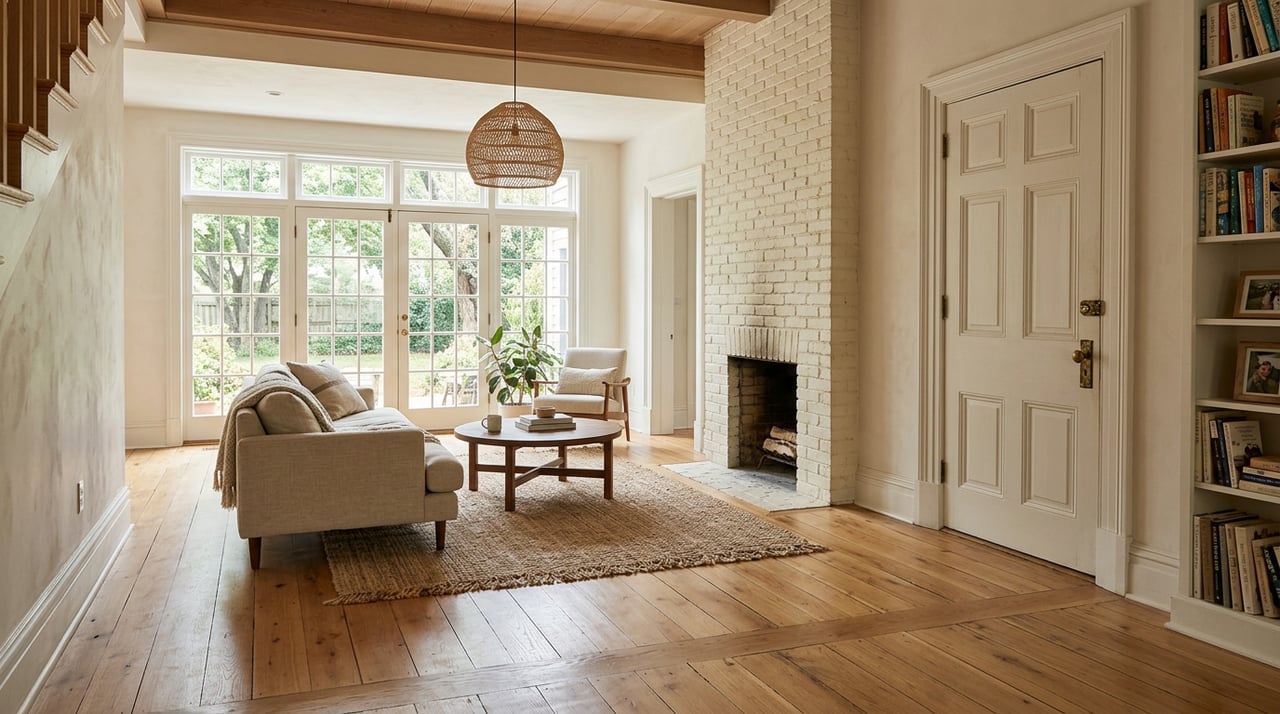
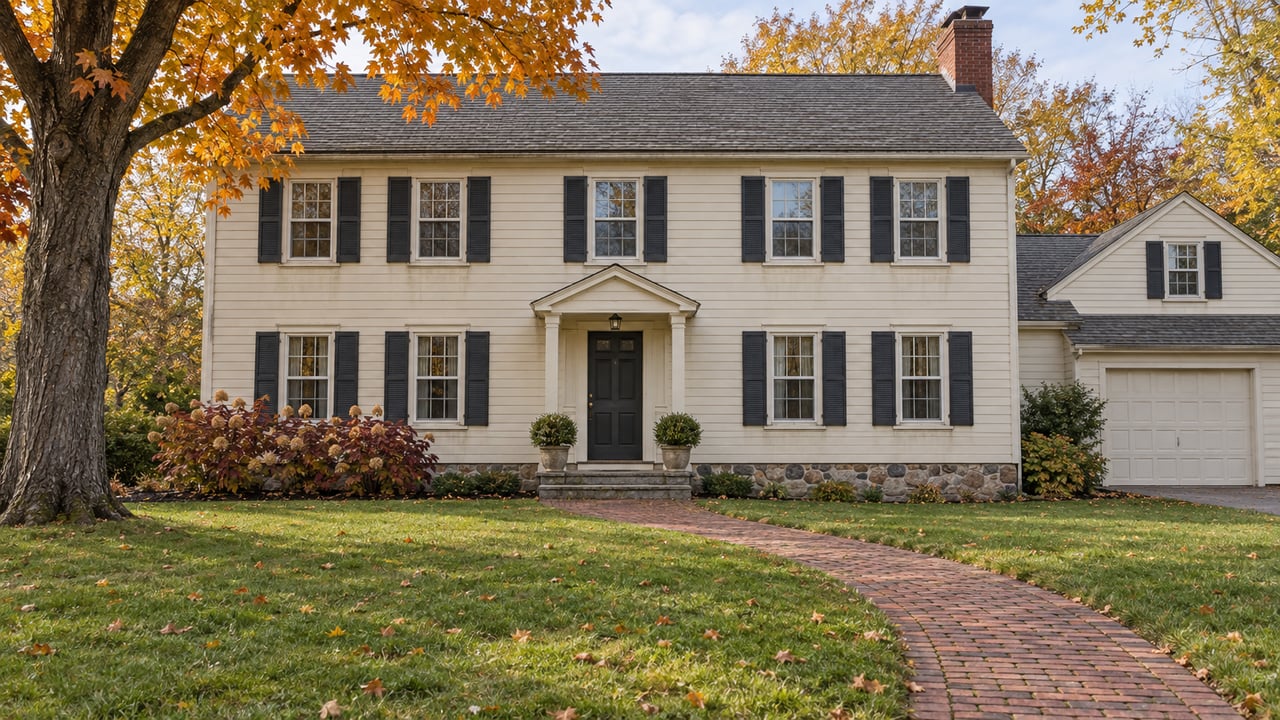
And surrounding all of it is the bulk of the neighborhood's housing stock: twins, split levels, ranches, and colonials built mostly through the 1960s and 1970s, with some construction stretching into the 1990s. That mixed inventory of brick-clad townhomes, duplexes, and detached homes on leafy streets is what most buyers picture when they picture Somerton.
Four eras of construction, one median. When a portal averages a 1920s Old Somerton twin with a Tudor Village bungalow from Uno Kallaste's original build-out and a 1985 split level three blocks away, the resulting number describes none of them particularly well.
Redfin's own data for March 2026 puts the median sale price per square foot in Somerton at $253, down 3.1 percent from the year before, even while the median sale price itself was reported as rising. That is not a contradiction. It is what happens when the mix of what sold shifts. If more of March's closings came from the larger, older Old Somerton stock or from homes needing work, the price per square foot can drop even as the headline dollar figure climbs, because bigger or less-finished homes carry a lower per-square-foot number even at a higher total price.
Homes.com's snapshot of the townhouse segment specifically, current as of this writing, shows 24 townhouses on the market ranging from $275,000 to $560,000, a spread wide enough to contain both a starter unit and a fully renovated property in the same category. That range alone should tell a buyer that "townhouse in Somerton" is not a price point. It is a category with its own internal spread, shaped by which decade's construction and which round of renovation a given unit has been through.
If the median price confusion were only about dollar figures, you could round to the middle and move on. But the pace of the market tells the same story from a different angle.
Redfin reported homes selling after 44 days on market in March 2026, up slightly from 42 days the year before. A different source pulling from Realtor.com data put the median at 30 days as of May 2026, itself up 9 percent from the prior year. Movoto's June 2026 figure was 13 days, flat compared to June 2025.
Three legitimate sources, three different speeds, all describing homes that sold within a few months of each other. The likely explanation is not that Somerton sped up and slowed down repeatedly through the spring. It is that these figures are drawn from different segments of the same neighborhood. A renovated twin in the 1960s-built core, priced correctly and move-in ready, can draw multiple offers and close in under two weeks. An original-condition Old Somerton property with deferred maintenance can sit for a month and a half waiting for the right buyer willing to take on the work. Redfin's own recently-sold data backs this up directly: it describes homes in Somerton typically selling in 31 days while receiving three offers, which only makes sense if a meaningful share of listings are moving fast under competition while others drag the average up from the slower end.
If you are pricing a home to sell, or trying to gauge how aggressively to bid on one, the single days-on-market number a portal hands you is close to useless without knowing which of Somerton's several markets your specific property belongs to.
The practical takeaway is not that Somerton's numbers are unreliable. It is that the neighborhood-wide median is a starting point, not a diagnosis. A buyer comparing Somerton to a neighboring Bucks County township on price alone is comparing a neighborhood-wide median drawn from Old Somerton, Tudor Village, and 1970s tract housing against whatever mix that other town happens to have. The comparison only holds up once you know which vintage you are actually pricing.
For a seller, this cuts both ways. A well-maintained, updated home in the newer core of Somerton is competing against recent closings in its own tier, not against the headline median that includes original-condition Old Somerton properties dragging the median toward a lower price point. Pricing off the wrong comparable, in either direction, is one of the more common ways a listing either sits too long or leaves money on the table.
For a buyer, the same logic applies in reverse. If your budget lines up with the reported median, ask which part of Somerton that median actually reflects before you assume it buys you a renovated home in the 1970s-built core. It might buy that. It might also buy an original-condition property in Old Somerton that needs real investment before it looks like the photos on the listing.
There is a broader affordability layer here as well. Current price levels and prevailing mortgage rates mean the income needed to comfortably carry the reported median home in Somerton runs meaningfully above the area's typical household income, which is part of why the newer, move-in-ready end of the market draws competing offers while the original-condition end of the stock can sit. That gap between what a household earns and what the median home costs to carry is itself a submarket signal, not just an affordability statistic.
If one portal shows a lower days-on-market figure than another, does that mean the market got hotter?
Not necessarily. It may mean that portal's sample happens to include more recently renovated homes in the 1960s-built core, which tend to move faster than original-condition properties in Old Somerton. Check what's actually included in the sample before assuming the whole neighborhood sped up.
Is a home in Tudor Village worth more or less than a similar-sized home in the newer part of Somerton?
It depends on condition and lot, not just location. Tudor Village's mid-century construction has its own character and its own maintenance considerations, and pricing it against a 1980s split level down the road requires comparing actual condition and recent updates rather than assuming one era automatically commands a premium over another.
If you are trying to figure out which part of Somerton actually matches your budget and your timeline, that is exactly the kind of comparison worth walking through with someone who watches these blocks closing by closing. Dawn Little has spent her career doing that kind of hyperlocal reading for buyers and sellers across Bucks County and the neighborhoods that border it, including Somerton. If you want a second opinion on what a specific number is really telling you, reach out to Dawn Little and request a free home valuation before you price anything off a portal median alone.
Stay up to date on the latest real estate trends.


Experience a client-first approach built on trust, compassion, and dedication—because your goals matter.

ADDRESS 12 TERRY DR STE 204 NEWTOWN PA 18940